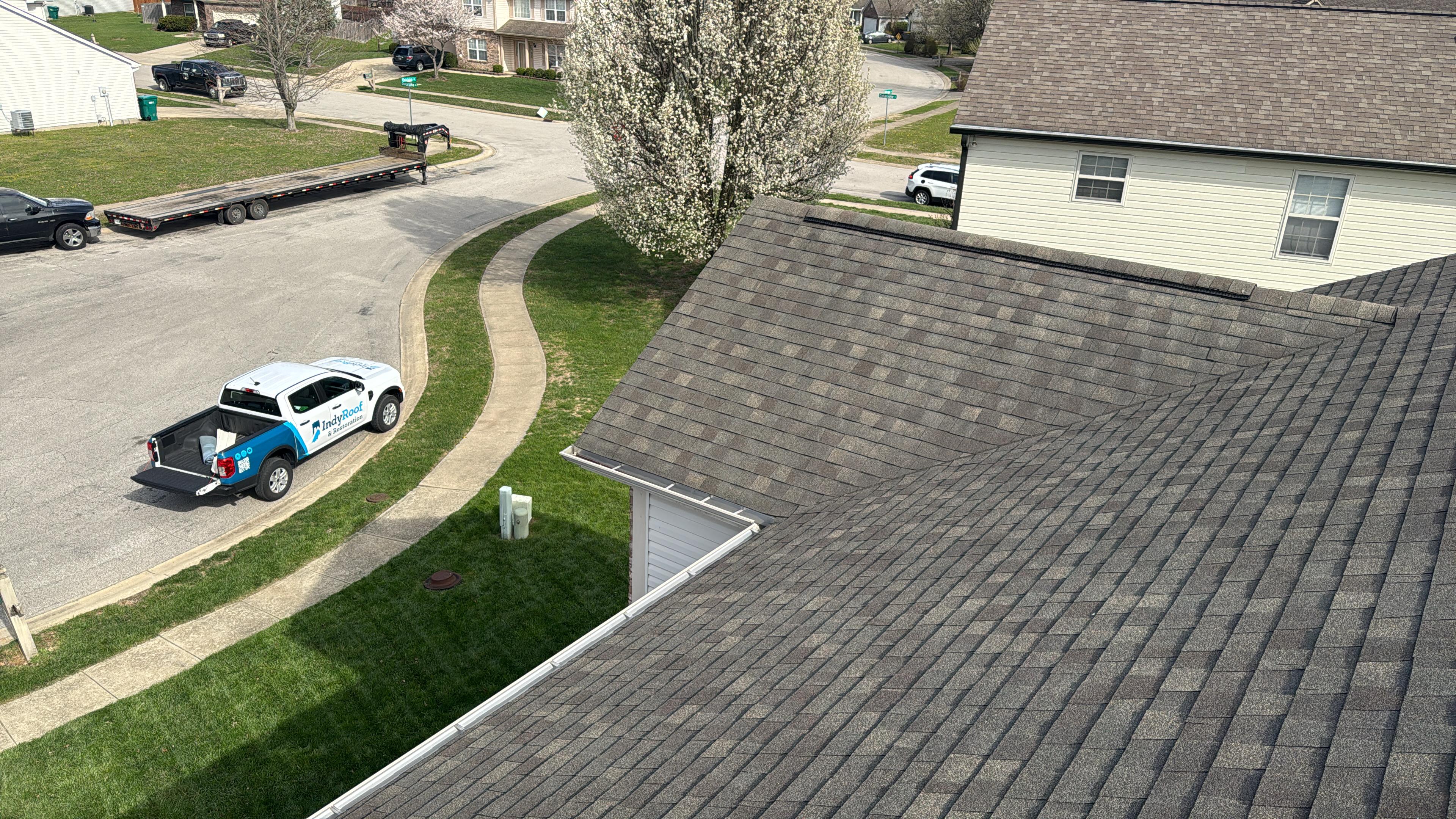
Does hail damage always mean I need a new roof?
No, and assuming the worst can cost you money you did not need to spend. Whether a Heritage Lake roof needs replacement depends on how severe the damage is, how widespread it is, the roof's age, and the shingle type. Light surface marks that do not affect how the roof sheds water often need no action at all. Fractured shingle mats spread across multiple slopes usually point to replacement, since patching would leave many compromised shingles behind. Many cases land in between and call for a targeted repair. The only reliable way to know which situation you are in is a professional inspection, because the damage that matters most is frequently hidden inside the shingle, and the choice rests on details that simply cannot be judged accurately from the ground.
What is the difference between functional and cosmetic damage?
Functional damage affects how the roof performs, such as granule loss that exposes the mat, a fractured mat that will fail early, or a puncture that lets water through. Cosmetic damage changes appearance without changing function, like a shallow dent on a metal vent that still sheds water normally. The distinction matters a great deal, because functional damage is what justifies a repair or replacement and what insurance is most likely to cover, while a number of policies specifically exclude cosmetic damage. A roofer or adjuster sorts one from the other during inspection, since the line between them is not always obvious to an untrained eye. Where your damage falls on that line largely decides both whether you should do anything and whether a claim has a real basis to stand on.
Will my insurance cover hail damage?
Usually, since hail is a sudden weather event rather than the slow wear from age that policies typically exclude. After a storm you file a claim and an adjuster inspects the roof, often counting impacts within a measured test square to gauge severity and spread. Widespread functional damage may be approved for a replacement, while isolated damage may be approved as a repair. Two policy details affect your cost in particular. Many policies carry a separate wind and hail deductible, sometimes a percentage of the home's insured value rather than a flat amount, and policies pay either actual cash value, which factors in depreciation, or replacement cost, which covers a new roof more fully. Reviewing both terms before filing tells you what a claim actually nets you so there are no surprises.
Can unaddressed hail damage hurt my home's value when I sell?
It can. A roof with confirmed functional damage that was never repaired is a problem a buyer's inspector will likely flag, and it can become a negotiating point or even hold up a sale until it is resolved. Hidden bruising that later turns into leaks can also surface as interior damage that scares buyers off. On the other side, documentation that the roof was inspected after a storm and either repaired or found sound is reassuring to a buyer and removes a question mark. So handling hail damage promptly is not only about protecting the roof now. It also protects the home's value later, which is one more reason to inspect in time rather than hoping the damage does not matter. A professional who has inspected the roof can explain the extent of any hail damage and the appropriate response. Because an insurance claim may be involved with significant hail damage, a professional assessment can help you understand the situation. For a clear answer on whether your roof needs repair or replacement after hail, a professional assessment is the reliable guide. Because the extent of hail damage varies, a professional assessment is the dependable way to determine whether repair or replacement makes sense. Rather than assuming the outcome, having a professional evaluate the damage clarifies what your roof actually needs. Whether a roof needs repair or replacement after hail depends on the damage, which a professional can assess for your situation. A professional who has inspected the roof can explain the extent of any hail damage and the appropriate response. Because an insurance claim may be involved with significant hail damage, a professional assessment can help you understand the situation. For a clear answer on whether your roof needs repair or replacement after hail, a professional assessment is the reliable guide. Because the extent of hail damage varies, a professional assessment is the dependable way to determine whether repair or replacement makes sense. Rather than assuming the outcome, having a professional evaluate the damage clarifies what your roof actually needs.
Are impact resistant shingles worth it if I am replacing the roof anyway?
In a hail prone area, they are worth weighing seriously. Class 4 impact resistant shingles are built to withstand more impact before the mat fractures, so they tend to come through storms with less functional damage than standard three tab shingles. That can mean fewer hail claims and a longer effective life in a place that sees regular storms. Many insurers also offer a premium discount for a Class 4 roof, which offsets part of the higher upfront cost over time. They are not indestructible, and severe hail can still cause functional damage, but they raise the threshold meaningfully. If you are already replacing the roof after a Heritage Lake hailstorm, ask the roofer to price the impact resistant option alongside a standard one so you can compare the cost against the protection and any insurance discount.
Why do bruised shingles matter if the roof is not leaking?
A bruise is a fracture in the shingle mat, which weakens the shingle even when nothing has opened up yet and no water is getting in. The roof may not leak for months, but that fractured spot loses its granules faster than the shingles around it and is far more likely to crack and admit water over the following seasons as the roof expands and contracts. So a roof can be compromised across a whole slope and show no leak for a year or more while the damage progresses the entire time. That delay is exactly why hail damage is so often underestimated, and it is why a prompt inspection after a storm is worth doing even when everything looks perfectly fine inside the house. Finding the bruising early, while the claim window is open, is what protects you.
Should I get on the roof to check for hail damage myself?
It is safer not to, on a couple of counts. Bruising is genuinely hard to read without training, the most consequential damage is often hidden inside the shingle, and a roof can be slick or unstable to walk after a storm. From the ground, though, you can safely look for early signs, like granules collecting in the gutters and at the bottom of the downspouts and fresh dents on metal vents, gutters, and flashing. For the actual assessment, have a professional inspect the roof, ideally within the claim window so the timing supports a claim. The ground level signs you notice will help the roofer focus the inspection, but the close, slope by slope examination that determines whether you need a repair or a replacement belongs to someone with the right footing and a trained eye.